1. Give Every Scrap a Job
Sort by usable size and behavior, not just color. Test bend, stretch, edges, stamping, and hardware before a whole batch becomes the experiment.
 HANNAH DIY
Get the exact starter patterns, leather weights, tool and hardware guidance, pricing examples, market setup, personalization limits, supplier scripts, and shipping steps makers kept asking for.
Stop guessing what to make with your offcuts. Start with four beginner-friendly products, test them properly, price every minute of your work, and build a small leather-goods line you can repeat at markets or online.
5 stars for you Hannah! You changed my life....I am a retiree struggling to pay rent and your method has helped me get started...made sales the first store I ran! Thank you so much, God bless!
Ebook contains a lot of great advice, I was able to make over $300 in my first store held in the flea market...thanks Hannah, love ya content a ton!
i wished i had gotten this book sooner....it would have saved me so much time... as a mom who is so busy, it took me WAY TOO long to figure this out on my own
The 4 starter pattern was super useful, as an elderly women i was afraid i couldnt follow the instructions but i was pleasantly surprised to find that it was easy. Great work Hannah, leaving a tip for you as well
Devoured the book in an afternoon and got to work...happy to share that I made my first sale during that weekend 🙏
Very impressed that Hannah actually took the time to revise and update the book with the latest prices/information...kudos!
Had a lot of questions but the guide was very helpful and gave me all the answers I needed
Reviews reproduced as written on Gumroad. Individual experiences are not a guarantee of sales or income.
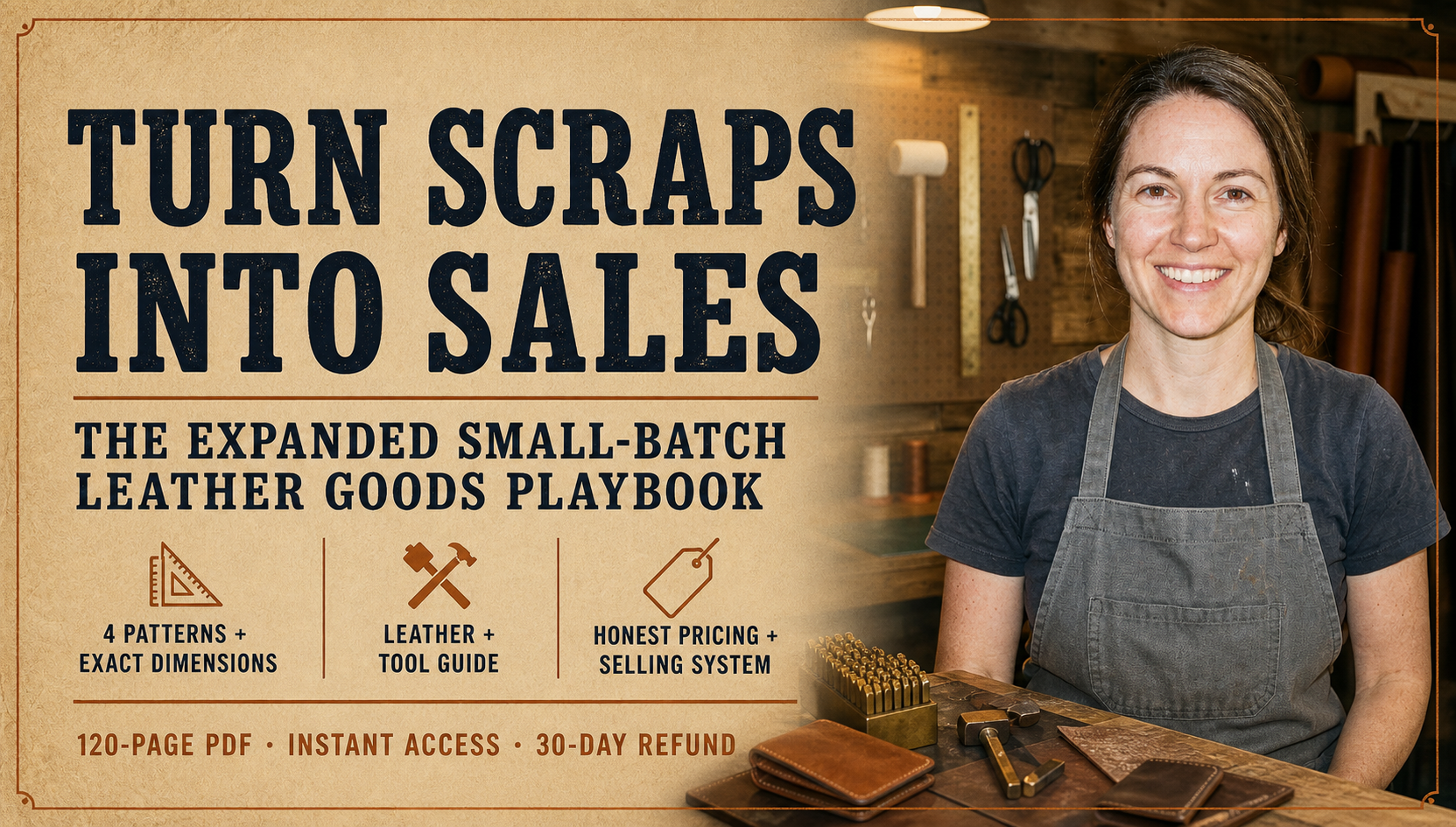
You already know how to make things from leather. The frustrating part is everything around the making.
Which scraps are actually usable? What thickness belongs in each product? Which tools do you need now, and which ones can wait? What size should you cut? Which rivet post fits the finished stack? How do you price your time without frightening the buyer? What belongs on the table? Should an online order go in a padded mailer or a box?
Those unanswered questions turn good leather into a growing pile of "maybe someday."
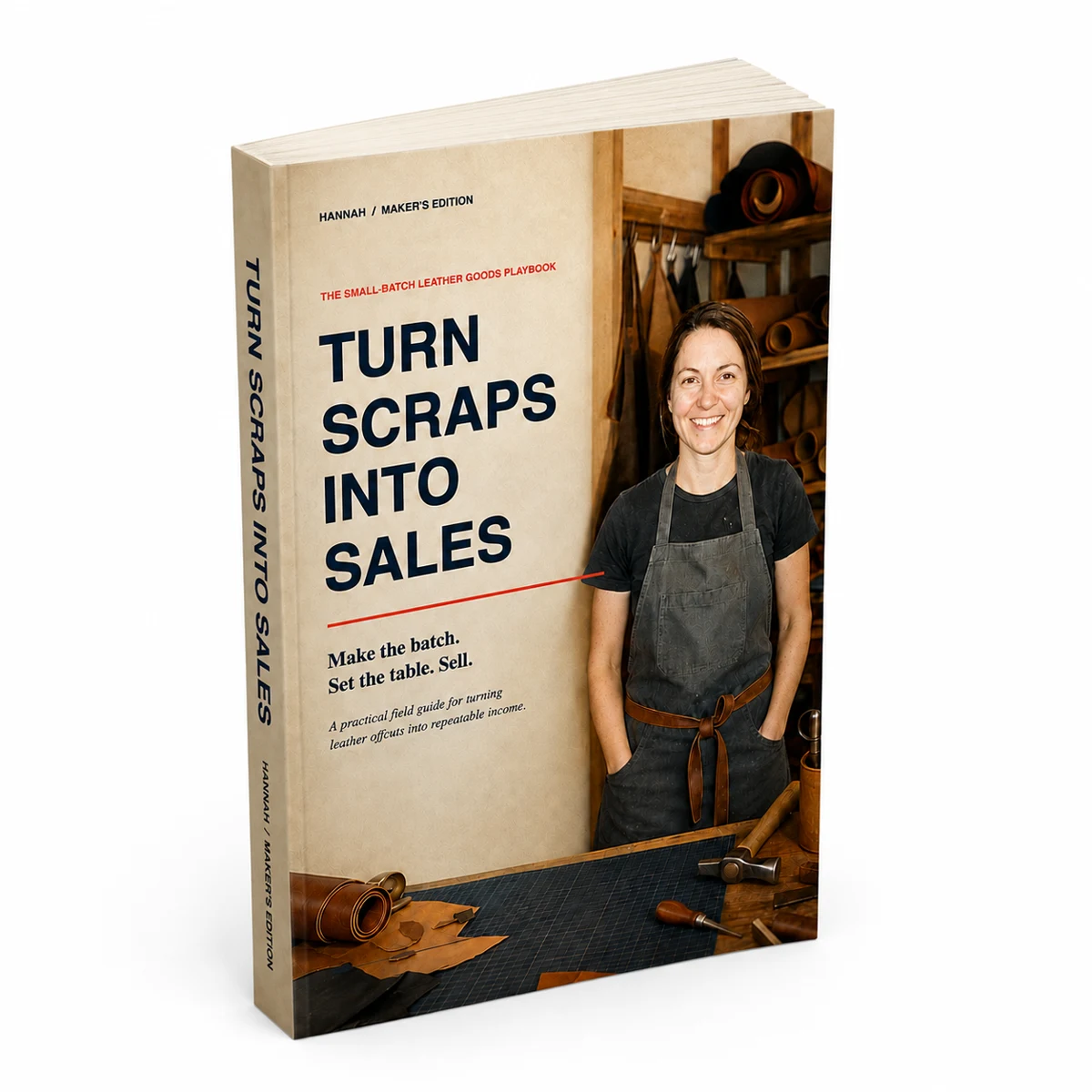
TURN SCRAPS INTO SALES gives every useful piece a job.
The expanded 120-page field guide takes you from the first material test to a finished product, a defensible price, a readable market table, and a shipped online order.
It is not another gallery of pretty projects with the important details missing. It is a practical system you can take to the bench.
Viewers did not ask for more vague inspiration. They asked for specifics:
Which leather should I use, and what do the ounce weights mean?
What tools should a beginner buy first?
Where can I find usable scraps and affordable hardware?
What are the exact dimensions for a key fob, cable wrap, card sleeve, and wallet?
How are the card pockets attached, and how do I stop a wallet becoming bulky?
Which rivet, snap, ring, stamp, dye, and edge finish should I use?
How long does a real batch take, and how should I price the labor honestly?
How do I build the display, choose a market, and handle live personalization?
How do I photograph, list, package, and ship a small leather product?
This edition brings those answers forward, with measurements, decision rules, worked examples, printable guides, and tests you can run with the leather and tools you already own.
The complete 120-page expanded edition: 19 chapters plus practical appendices, printable dimension guides, worksheets, and field tests.
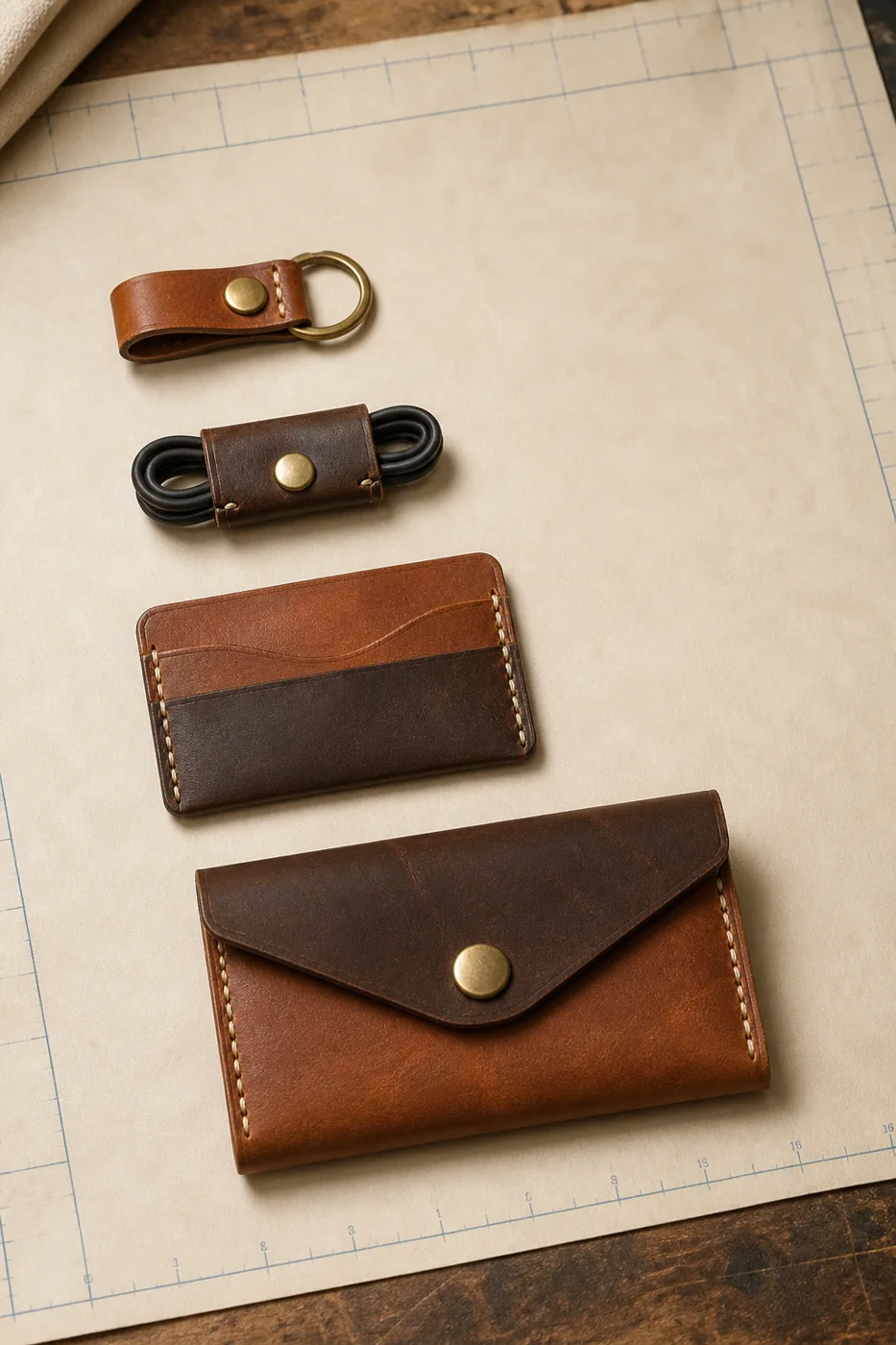
Four starter patterns: a folded key fob, cable wrap, card sleeve, and compact bifold, with written dimensions and construction guidance.
The leather decision guide: vegetable-tanned versus chrome-tanned leather, ounce-to-millimeter guidance, temper, stretch, edge behavior, and a four-part scrap test.
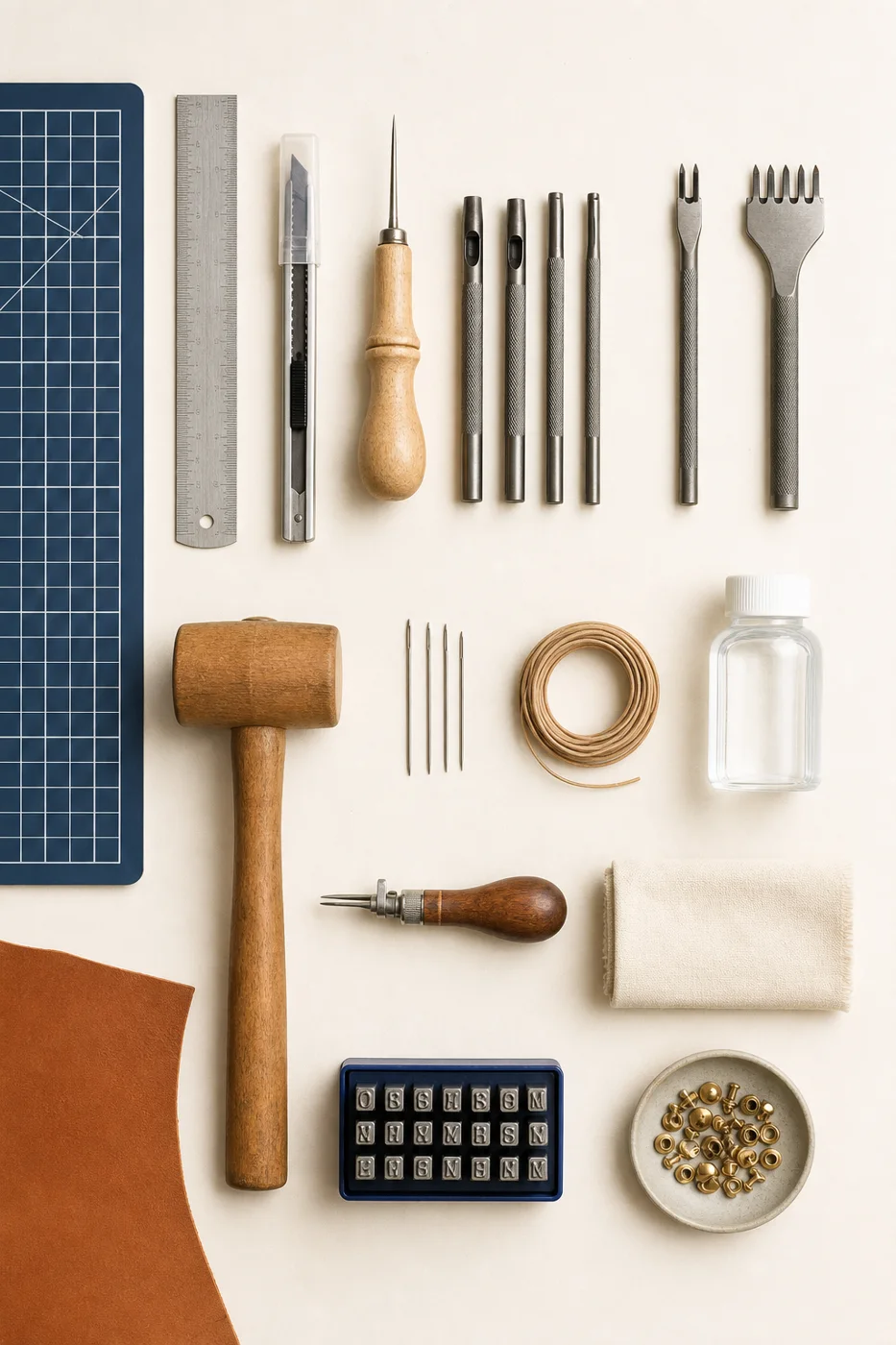
The staged tool kit: what to buy for cutting and fastening, what to add for stitching and finishing, and what should wait until sales prove the need.
The sourcing system: supplier outreach wording, acceptance rules, hardware lot checks, usable-yield calculations, and a supplier scorecard.
The Job Rule: choose one buyer, one market, and one sales target before cutting another random product.
The Line Ladder: entry, core, and hero products that share leather, hardware, tools, and buyer logic so each item helps sell the next.
The Pricing Formula: materials, measured labor, overhead, selling fees, packaging, failures, and personalization, with a floor price you can defend.
The honest batch plan: ten-unit time studies, production travelers, quality checks, and realistic active-versus-passive time.
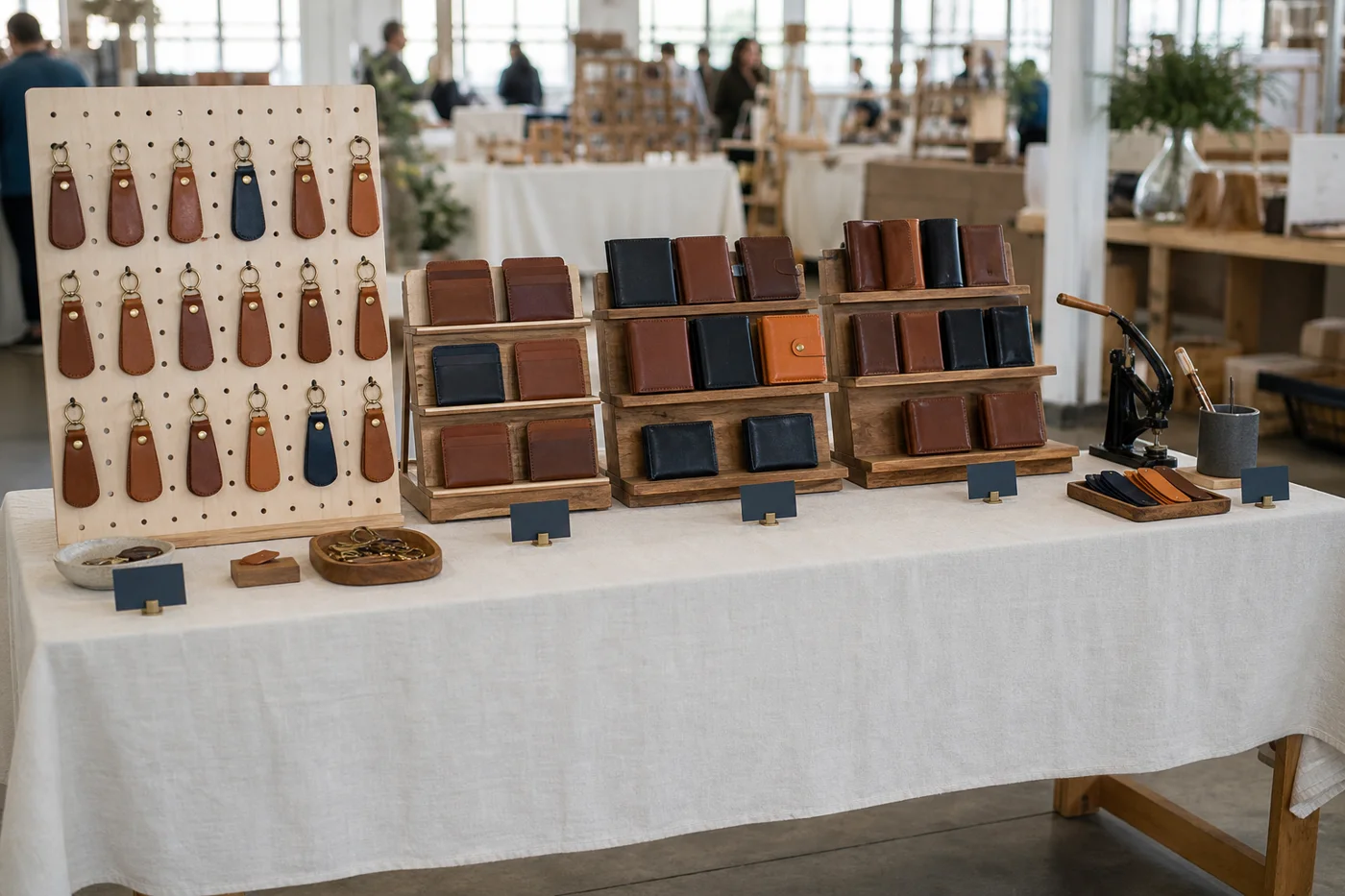
The table and booth plan: clear product zones, visible pricing, display choices, backstock, payment space, and a controlled live-stamping station.
The online sales guide: proof-based photos and listings, capacity claims, personalization instructions, sealed parcel tests, and padded-mailer-versus-box decisions.
The Receipts Routine: track conversations, units, revenue, average order value, product mix, unsold stock, and delayed purchases, then change one variable at a time.
1. Give Every Scrap a Job
Sort by usable size and behavior, not just color. Test bend, stretch, edges, stamping, and hardware before a whole batch becomes the experiment.
2. Match the Product to the Leather
Learn when firm vegetable-tanned leather helps, when soft chrome-tanned leather is the better choice, and how stacked thickness changes folds, rivets, snaps, and wallets.
3. Build Four Products With Clear Starting Dimensions
Begin with a folded key fob, cable wrap, card sleeve, and compact bifold. Use the printable dimension guides, then test one cardstock model and one leather sample before batching.
4. Buy Tools in the Right Order
Avoid spending hundreds on a workshop before one product has earned it. Start with safe cutting and fastening, add stitching and finishing when needed, and upgrade only the bottleneck you measured.
5. Source Scraps and Hardware Without Buying Another Mystery Pile
Ask suppliers for specific sizes, thicknesses, and conditions. Calculate cost from usable pieces, not gross weight, and record exact hardware part numbers and landed costs.
6. Price the Hands, Not Just the Leather
Time setup, active work, drying, inspection, rework, cleanup, packaging, and fees. Build a floor price first, then test what your real local buyer will pay.
7. Batch Without Making Speed Claims You Cannot Defend
Measure ten good units, not the fastest unit. See where the minutes actually go and decide whether to simplify, raise the price, improve the process, or retire the product.
8. Set a Table That Buyers Understand in Seconds
Use entry, core, and hero zones. Give every product a clear home, make prices visible, leave room to pay and wrap, and limit personalization to options you can execute cleanly.
9. Sell Online With Proof
Show dimensions, edges, capacity, hardware, packaging, dispatch time, and variation. Weigh and measure the sealed parcel so "free shipping" does not quietly erase the margin.
10. Use the Next 30 Days to Create Evidence
Test materials and patterns in week one, run time studies and calculate prices in week two, build the table or listings in week three, then sell, review, and improve in week four.
Tap a page to take a closer look.


No more saving awkward shapes without a plan. No more buying another tool because a video made it look essential. No more apologizing for a price you calculated from memory. No more arriving at a market with unrelated products and hoping the table somehow explains itself.
Instead, you have a tested starter line, written dimensions, known hardware, measured time, visible prices, and a clear next batch.
That confidence is what lets you stop treating your craft like a collection of one-off experiments and start treating it like a small, repeatable business.
This is for the leather maker who:
Has a growing box of offcuts but no reliable product plan.
Wants exact starting dimensions and practical guidance, not only inspiration.
Is new to selling and needs a clear first market or online offer.
Already sells but suspects labor, packaging, or failures are missing from the price.
Wants a small line that can be made repeatedly without turning the workshop into a factory.
Needs honest answers about tools, leather, hardware, displays, personalization, and shipping.
This is not a promise that every scrap is free money. It is not a substitute for practicing safe cutting, stitching, stamping, and hardware setting. And it is not a get-rich-quick system built on unrealistic production times.
It is the practical business and production system around the craft: what to test, what to record, what to charge, what to show, and what to change next.
Is this suitable for a beginner?
Yes. It starts with leather behavior, a staged tool kit, and four straightforward products. You do not need a fully equipped workshop. You do need to make and test one sample before producing a batch.
Does it include exact patterns and dimensions?
Yes. The expanded edition includes written starting dimensions and printable guides for a folded key fob, cable wrap, card sleeve, and compact bifold. Hardware and leather vary, so the book also shows you how to prototype and verify the fit before cutting ten pieces.
Will it tell me which leather and tools to use?
Yes. You will learn how tannage, thickness, temper, stretch, edge behavior, and stacked layers affect the product. The tool section separates what you need to cut and fasten now from what can wait until the product earns an upgrade.
Does it cover pricing?
Yes. You will calculate a true floor using landed materials, measured labor, overhead, selling costs, packaging, and failures. You will also see how to test the final price in your own market instead of copying a number from another country or event.
Does it cover markets and online selling?
Yes. It includes a six-foot table map, display and backstock guidance, market economics, live-personalization controls, proof-based listings, packaging decisions, parcel measurements, and shipping costs.
Is this only for leatherworkers?
The patterns and technical examples are for leather. The broader system, job, line, price, batch, table, sale, and review, can also help makers selling other handmade goods.
What format is it?
A 120-page illustrated PDF with instant and lifetime access. Read it on a phone, tablet, or computer, or print the worksheets and dimension guides for your bench.
When can I use it?
Immediately. Start with the scrap test and one starter pattern today. You can set a small product line and calculate its prices before your next market instead of waiting until another box of material accumulates.
What if it is not useful for me?
Use the system on one product or at one market. If it does not help you make a clearer, better-tested selling decision, contact me within 30 days for a refund.
You do not need another pile of ideas. You need four products you can test, prices you can explain, and a process you can repeat.
Get TURN SCRAPS INTO SALES now and turn the leather you already have into your first clear, sellable small-batch line.